honestly fuck viruses they’re not even alive they’re just strands of punk ass DNA that go around fucking up us normal and god fearing life forms you don’t even have a nucleus you stupid bacteriophage looking horizontally transmitting RNA clump
So I was told that Human Planet had a segment about pigeons in the Cities episode that I might be interested in and I was honestly so underwhelmed. I haven’t finished the episode so maybe there’s more pigeon stuff but I feel like all I saw was more Birds Of Prey Are The Only Cool And Acceptable Birds and pigeons are Trespassers In Our Urban World Who Shit On Everything And Are Useless On Top Of It. Which isn’t true and I’m so tired of this being framed as some horrible burden that humanity must face. Pigeons are the victims here, not us.
Hate of pigeons didn’t start until the 20th Century. Before that was about 9,900 years of loving them. The rock pigeon was domesticated 10,000 years ago and not only that, we took them freaking everywhere. Pigeons were the first domesticated bird and they were an all-around animal even though they were later bred into more specialised varieties. They were small but had a high feed conversion rate, in other words it didn’t cost a whole lot of money or space to keep and they provided a steady and reliable source of protein as eggs or meat. They home, so you could take them with you and then release them from wherever you were and they’d pretty reliably make their way back. Pigeons are actually among the fastest flyers and they can home over some incredible distances (what fantastic navigators!). They were an incredibly important line of communication for multiple civilisations in human history. You know the first ever Olympics? Pigeons were delivering that news around the Known World at the time. Also, their ability to breed any time of year regardless of temperature or photoperiod? That was us, we did that to them, back when people who couldn’t afford fancier animals could keep a pair or two for meat/eggs.
Rooftop pigeon keeping isn’t new, it’s been around for centuries and is/was important to a whole variety of cultures. Pigeons live with us in cities because we put them there, we made them into city birds. I get that there are problems with bird droppings and there’s implications for too-large flocks. By all means those are things we should look to control, but you don’t need to hate pigeons with every fibre of your being. You don’t need to despise them or brush them off as stupid (they have been intelligence tested extensively as laboratory animals because guess what other setting they’re pretty well-adapted to? LABORATORIES!) because they aren’t stupid. They’re soft intelligent creatures and I don’t have time to list everything I love about pigeons again. You don’t need to aggressively fight them or have a deep desire to kill them at all. It’s so unnecessary, especially if you realise that the majority of reasons pigeons are so ubiquitous is a direct result of human interference.
We haven’t always hated pigeons though, Darwin’s pigeon chapter in The Origin of Species took so much of the spotlight that publishers at the time wanted him to make the book ONLY about pigeons and to hell with the rest because Victorian’s were obsessed with pigeons (as much as I would enjoy a book solely on pigeons, it’s probably best that he didn’t listen).
My point is, for millenia, we loved pigeons. We loved them so much we took them everywhere with us and shaped them into a bird very well adapted for living alongside us.
It’s only been very recently that we decided we hated them, that we decided to blame them for ruining our cities. The language we use to describe pigeons is pretty awful. But it wasn’t always, and I wish we remembered that. I wish we would stop blaming them for being what we made them, what they are, and spent more time actually tackling the problems our cities face.
I just have a lot of feelings about how complex and multidimensional hating pigeons actually is
ALL OF THIS
And also pigeon poop was a very valuable fertilizer before we had other options, people would hire guards to stop thieves from stealing their flock’s poop.
#LovePigeonsAgain2016
Late night, reblogging, so bear with me here…
Thank you for posting much of my thoughts over the past year and a half! I am known by many as “that guy who keeps the raptors”. Yes this is true, I do keep and handle raptors for educational purposes, but what many fail to realize is, I am fascinated with pigeons. My interest with birds began with the obvious, the raptors, corvids, and parrots. Then I discovered pigeons. These wonderful little birds with big attitudes and the incredible ability to thrive among people.
The organization I work with got its first pigeon a little over a year ago. She was a rescue with nowhere else to go. I was quickly drawn to her character and attitude about life.
We rarely handled her, but we did spend time with her.
She grew attached to our volunteers very quickly because their were no other birds she could socialize with in our facility.
We never intended to train her for educational programs. It was a job reserved for our raptors. It was our pigeon who decided she would be a part of what we were doing. One day, when we entered her enclosure to change water and food, she decided to fly to my hand and perch like our raptors do.
No training, no treats, just the reward of being with us.
What we hadn’t noticed for the couple months prior was her watching us. This brilliant little bird had been watching us every day as we trained and worked with our raptors. Finally she decided she didn’t want to be left out any longer. She made her place on our hands.
This occurred several times before we finally put her on a glove and brought her into the public. Needless to say, she was right at home. She fluffed up and preened the entire evening while people gawked and asked us why we had a pigeon on one glove and a hawk on another.
Since then, we’ve added 5 more rescued pigeons to our growing flock. And our pigeon (Tybalt) has become a mainstay ambassador for our programs. Each of our pigeons are incredibly fun to watch and interact with. Pigeons simply don’t get enough love. They are marvelous creatures incredibly suited to life alongside people both physically and mentally.
Raptors my have been my introduction into birds, but pigeons opened my eyes to a new appreciation for them and the fascinating world of bird cognition.
NOT ONLY are pigeons very amazing, worth our respect, and INTERESTING (did you read any of that stuff above?), but they are beautiful too!
Not chickens, but I feel compelled to spread this gospel.
hmmm. this is making me rethink my new york pigeon hate
and, AND, haven’t you ever wondered why city pigeons come in a magnificent rainbow of unusual colors?
Most wild animals all look alike within a species, with TINY, RARE individual variations in terms of rare color morphs, unusually big or small animals, different facial markings and other subtleties. But there is no evolutionary benefit to having species where everyone looks slightly different, and in fact, it’s beneficial for species to be similar and consistent, with a distinctive aesthetic. Especially if you’re trying to blend into the environment – a black wolf is all very well, but it looks positively silly in the summer tundra, where its grey/brown/brindley cousins blend in. A white deer has a great aesthetic – and a very short lifespan in the forest. Distinctive Protagonist looks are rare in the wild, simply because natural selection usually comes down heavily on them.
To humans, most wild animals are visually indistinguishable from each other.
As a result, most wild animals are like
“Oh it’s obvious – you can tell the twins apart because Kara has a big nose.”
Wild animals usually have a pretty consistent aesthetic within their species. It’s important to them!
SO WHAT IS GOING ON WITH PIGEONS?
Look, in one small picture you’ve got a red color morph in the center, several melanistic dark morphs, a few solid black birds, a few variations on the wildtype wing pattern, a PIEBALD, a piebald copper color morph…
Like, there are LAYERS UPON LAYERS of pigeon diversity in most flocks you see. Pure white ones with black wingtips. Solid brown ones with pink iridescent patches. Pale pinkish pigeons.
WHY IS THAT? When other wild animals consider “being slightly fluffier than my brother” to be dangerously distinctive in most circumstances?
BECAUSE CITY PIGEONS AREN’T TRULY WILD.
MANY OF THEM (POSSIBLY MOST OR ALL) ARE FERAL MIXES.
THEY WERE ONCE BELOVED PETS, SPECIAL MESSENGERS, EXQUISITE SHOW-WINNERS, AND PRIZED LIVESTOCK.
THEIR PRETTY COLORS WERE DELIBERATELY INTRODUCED BY HUMANS.
AND NOW THEIR HUMANS DON’T LOVE THEM ANY MORE.
See, pigeon fanciers bred (and still breed!) a huge array of pigeons. And the resulting swarms of released/discarded/escaped/phased out “fancy” pigeons stayed around humans. What else were they going to do? They interbred with wildtype pigeons.
Lots of the pigeons you see in public are feral. They’re not wild animals. They’re citizen animals. They’re genetically engineered. And now that’s what “city” pigeons are.
These “wild” horses are all different colors because they’re actually feral. Mustangs in the American West are the descendants of imported European horses – they’re an invasive domestic species that colonized an ecological niche, but they are domestic animals. Their distinctive patterns were deliberately bred by humans. A few generations of running around on the prairie isn’t going to erase that and turn them back into wildtypes. If you catch an adult mustang and train it for a short period, you can ride it and have it do tricks and make it love you. It’s a domestic animal. You can’t really do that with an adult zebra.
No matter how many generations these dogs stay on the street and interbreed with one another, they won’t turn back into wolves. They can’t. They’re deliberately genetically engineered. If you catch one (even after generations of rough living, even as an adult) you can make it stare at your face, care about your body language, and love you.
City pigeons? Well, you don’t have to like them, but they’re in the same boat. They’re tamed animals, bred on purpose, living in a human community. Their very bodies are marked with their former ownership and allegiance; they cannot really return to what they once were; if you caught one, you could make it love you (in a limited pigeon-y way.) They have gone to “the wild,” but not very far from us, and they’d be happy to come back.
So next time you see a flock of city pigeons, spare a moment to note their diversity. The wing patterns. The pied, mottled and brindled. The color types.
A lot of pets will ignore you, but only a cat will follow you from room to room and check your lines of vision to make absolutely certain that you can see them ignoring you.
theyre not ignoring you! this is actually just a cats way of saying they want to keep you company without infringing on your personal space. its the equivalent of going to a friends house while you both separately scroll through tumblr, even though youre glad to be together. alternatively the cat could be curious about what you are doing, but shy to make its presence known. either way the cat is paying very close attention to you!
this made me feel better
😺
I don’t understand why cats will have everything they do demonized no matter how innocent it is
It’s because they are hypersensitive introverts, and humans are mostly social extroverts.
Hypersensitive, introverted humans are often mistaken for antisocial, and as a species, we are myopic and anthropomorphize EVERYTHING.
Semi-social animals are not naturally intuitive to humans.
Dog packs very closely mirror a nuclear human family, made up of a mother and father and their pups, who leave to find their own mates and start their own packs as they mature beyond young adult hood.
Pigeon flocks are like a villiage comprized of one big, extended family, where children mostly stay close and new birds marry in.
Cats don’t work that way. There is no firmly set social structure for more social domestic cats to fall back on. None of the species they are thought to come from are naturally social. They mate, have kittens, and those families disperse to the four winds as soon as the young become self sufficient.
We have selected for higher tolerance to crowding and confinement, but that does not a social structure make.
A group of cats is more like random collage dorm or house mates. Whether or not they get along and how many the group can support long term depends on how well their individual personalities mesh, regardless of blood relation.
Kittens are more out going and have more energy than adult cats, but as they age, being playful and taking the risk of being friendly takes more energy than they have, so they go from being willing to play with every one to prefering the company of favorite familiar entities that have taken the time to learn about that individuals needs and preferences.
Humans, who naturally form close knit pack bonds, are generally out going, and do their very damnedest to form life long bonds of friendship see a cat’s intense curiosity and wary shyness of approach as stalkerish, and its need for quiet solitude when overstimulated (coupled with just *how* fast they become overstimulated) as fickleness, and are completely heartbroken when a friendly, out going kitten grows into a relatively shy, reserved cat.
With no effort to understand, what the average human sees is a sly, untrustwothy animal that is friendly one second, and warninglessly aggressive the next, not because there actually was no warning, but because feline body language is very subtle.
Once again, due to a cat’s sensitivity.
To a cat, humans are VERY loud, over the top dramatic, and socially dense as a fucking brick.
They have to scream EVERYTHING to get across to most of us, and that shit is exhausting.
The fact that they do make that stressful and exhausting effort proves that the ones who like us actually love us VERY much! Just not in a way that big, loud, oblivious drama queens easily pick up on.
Reblogging to the pet blog because animal behavior.
domestication syndrome is one of the coolest findings from recent genetics
Yes!
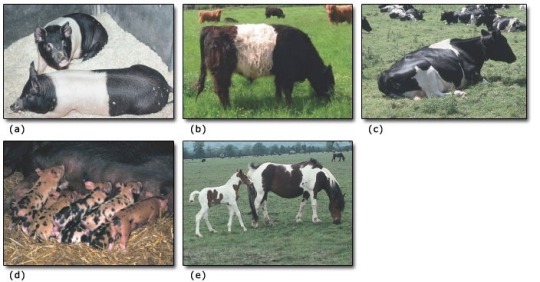
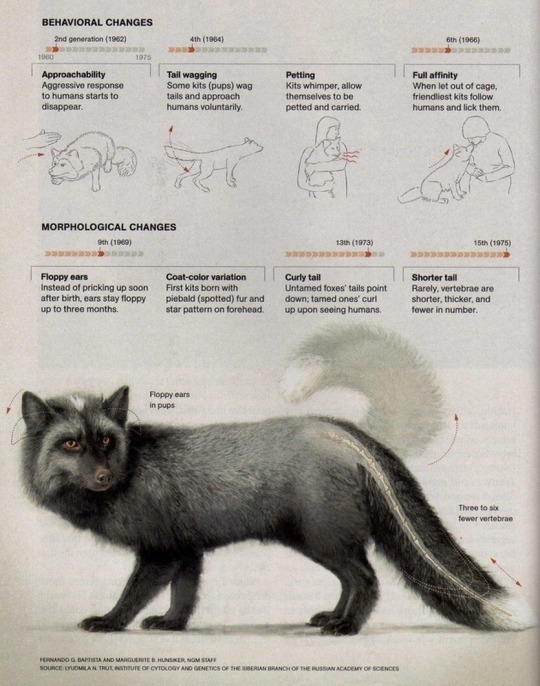
Basically scientists have found that if you start selecting for people-friendly animals, you see a bunch of hypothetically unrelated traits start showing up in all sorts of mammal species: floppy ears, piebald/patterned coats, etc.
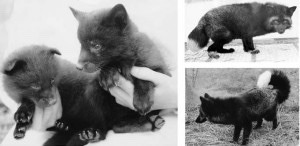
This is true for everything from cows to dogs to rats! One of the coolest long term studies on this has been the Russian fox experiments.
So essentially the science goes like this:
You have two copies of every genes, one from each parent.
We tend to simplify genetics, and say that for every single gene you have it is random,l coin flip which copy you pass on to you offspring. We also tend think of genes as a 1:1 ratio of genes—>traits.
But! This is not quite the case.
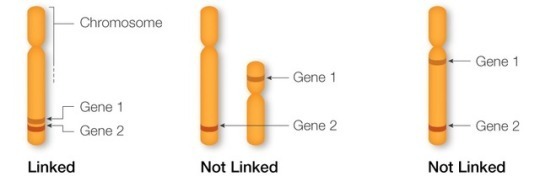
Genes have a specific physical location and order relative to each other on your chromosomes, and the chance of genes being inherited together goes up the closer together they are located. This means random, unrelated traits can wind up being more commonly inherited together in specific patterns just because those genes are located close together, and you don’t get that completely random reshuffling of two parent’s traits. Some of them tend to stay “stuck” together.
This is called linkage, and it’s why you often see red hair, pale skin, and freckles together, for example.
The second factor that plays into this is that a lot of times 1 gene affects several different traits (or several different genes affect 1 trait). This means that sometimes you really *can’t* untangle two traits because they have a similar cause. For example, say genes for increased aggression are responsible both for making a spider a better hunter (pro) and making a spider more likely to eat its offspring (con). Because the same gene is the cause of both things, natural selection can’t really untangle them.
Circling back to the redhead/freckles/pale skin example, these traits are affected by a number of different genes, but also one gene in particular: MCR1, a gene that changes how your body responds to hormones promoting melanin production. Again, one gene related to pigment production can affect a BUNCH of different traits. (And also skin cancer risk. Fun!)
Domestication Syndrome in mammals turns out to be due to both linkage and genes affect by multiple traits!
See, when we domestic animals we want them to be friendlier/less aggressive, which normally translates to less FEARFUL.
And it turns out that the same genes involved in adrenal responses and other stress reactions are also involved in melanin, cartilage, and bone production. So when we domesticate animals we get these recurring changes in pigmentation (white patches, piebald costs), floppy ears (cartilage), shorter muzzles and other changes in physical stature (bone growth), etc.
We also wind up selecting for a lot of neotenic genes in general— that is, retention of childhood traits into adulthood. That’s because baby animals tend to have lots of friendly/trusting/biddable/curious traits we are looking for.
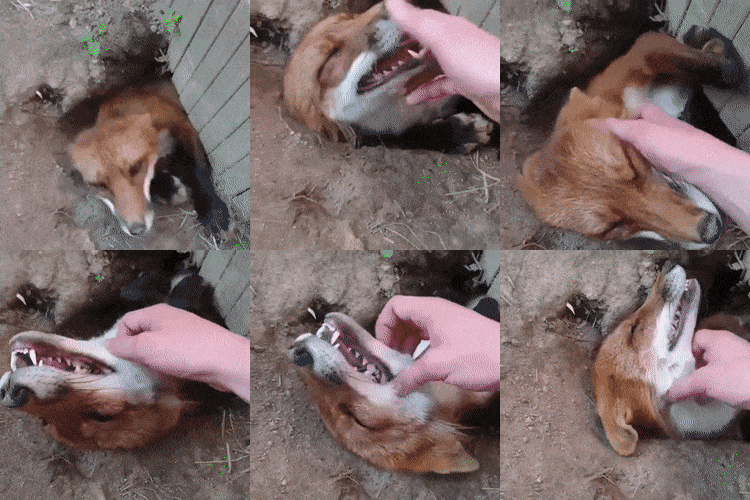
And honestly, who can say no to a face like this?
ps, since it was mentioned:
the same genes involved in domestication probably help animals form social groups in general. if you need to get along with and trust strangers you need a decrease in the panic/aggression genes.
cats, for example, probably domesticated themselves when they started living close to each other and to humans to feed off of pests in grain silos.
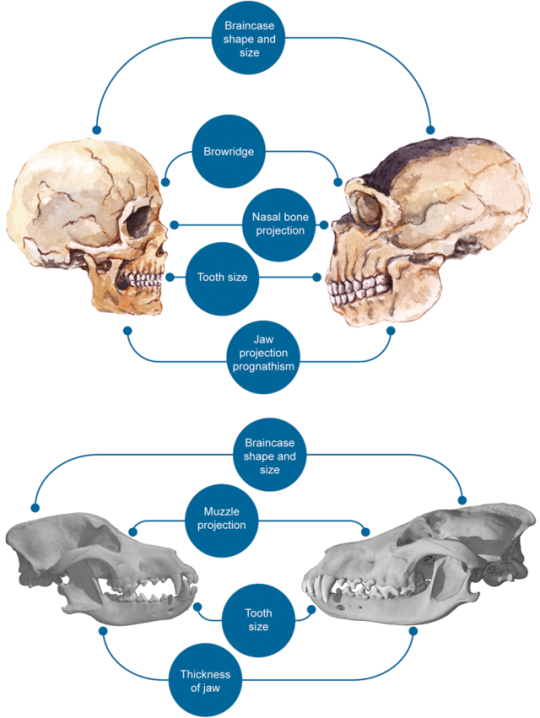
and yeah, some some recent theories suggest humans may have ‘domesticated’ themselves:
so basically you’re saying that when we breed animals to be friends, they become friend-shaped.


 artherra